Navigation auf uzh.ch
Navigation auf uzh.ch
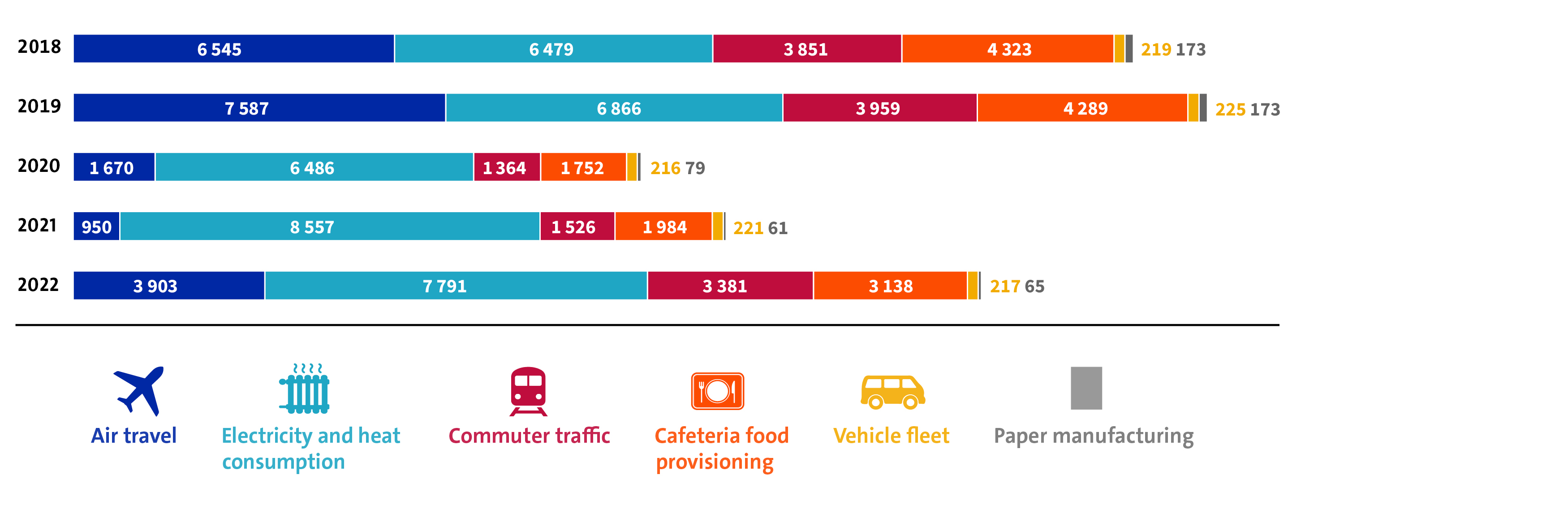
UZH has set itself the target of becoming climate-neutral by 2030. From 2030, the target relates to the categories of energy, air travel, commuting, vehicle fleet, food, paper, water and waste. In addition it relates from 2035 onwards to construction activities and laboratory and research materials. At least half of the emission reduction shall be achieved through own measures in university operations. Reduction measures are already being implemented in the following areas, among others:
Air travel
Food (German)
Energie (German)
To develop new ideas for climate neutrality, UZH makes itself available to its researchers, staff and students as a real-world laboratory.
UZH as a real-world laboratory for climate neutrality
Do you have your own suggestions and ideas for reducing greenhouse gas emissions at UZH? Send us your
suggestions
For further questions and comments, please write at
info(at)sustainability.uzh.ch